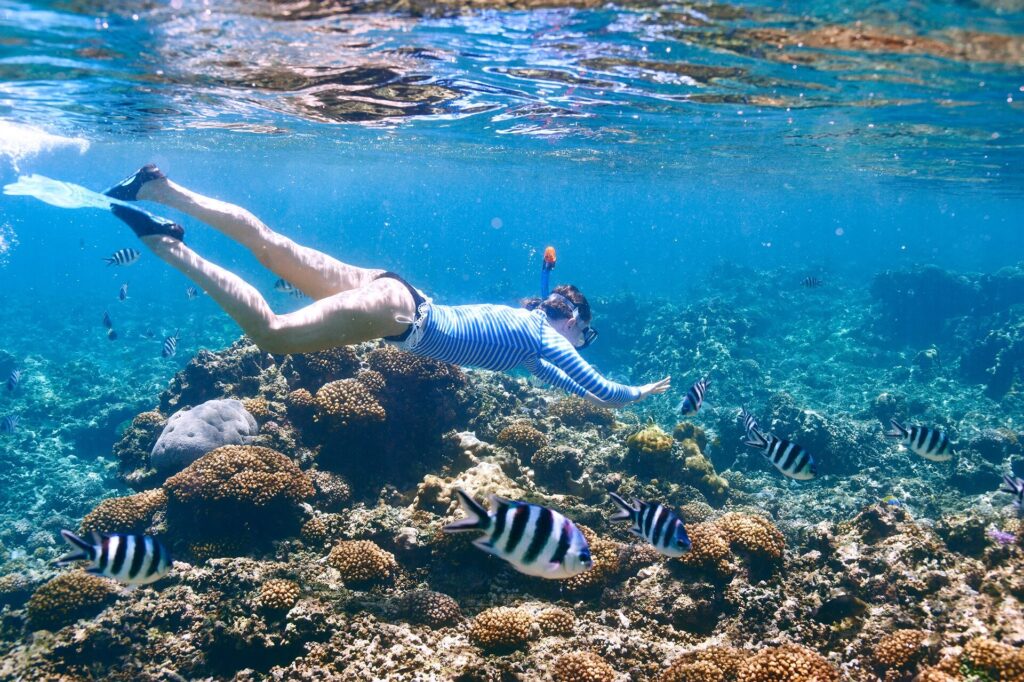
Pink Beach Komodo Marine Life — Complete Species Guide
Komodo National Park contains one of the richest marine ecosystems on Earth, sitting at the convergence of the Pacific and Indian Oceans. Pink Beach sits at the heart of this biodiversity hotspot. Here is a complete guide to the marine life you can expect to encounter.
Fish species in the park
Coral species
Sponge species
Sea turtle species
Shark species
Whale + dolphin species
Sea Turtles at Pink Beach
Sea turtles are almost guaranteed at Pink Beach. Both green turtles (Chelonia mydas) and hawksbill turtles (Eretmochelys imbricata) feed on the seagrass beds surrounding the reef. Turtles are most active in the morning (8–11am). Never chase or touch them — the park rangers are strict about this.
Manta Rays Near Pink Beach
Reef manta rays (Mobula alfredi) gather seasonally at Manta Point, approximately 45 minutes by boat from Pink Beach. Peak manta season is October–April when planktonic blooms attract feeding mantas. Oceanic manta rays (Mobula birostris) — the largest ray species at up to 7m wingspan — are also sometimes seen. Swimming with mantas at Manta Point is one of Komodo’s signature experiences.
Reef Fish at Pink Beach
Angelfish
- Emperor angelfish
- Regal angelfish
- Semicircle angelfish
- Bicolor angelfish
Butterflyfish
- Lined butterflyfish
- Raccoon butterflyfish
- Copperband
- Threadfin
Reef Sharks
- Whitetip reef shark
- Blacktip reef shark
- Grey reef shark
- Tawny nurse shark
Large Pelagic
- Napoleon wrasse
- Bumphead parrotfish
- Giant trevally
- Dogtooth tuna
Coral Species at Pink Beach
The coral reef at Pink Beach is exceptionally diverse. Hard corals include staghorn coral (Acropora), table coral, brain coral (Lobophyllia), plate coral, and pillar coral. Soft corals include sea fans (gorgonians), sea pens, and leather coral. Komodo National Park has some of the highest coral diversity in the Indo-Pacific Coral Triangle.
Snorkel & Dive Pink Beach’s Marine Life
Book with our expert guides who know the best spots for turtle, manta, and reef encounters
Snorkeling Guide →